Research
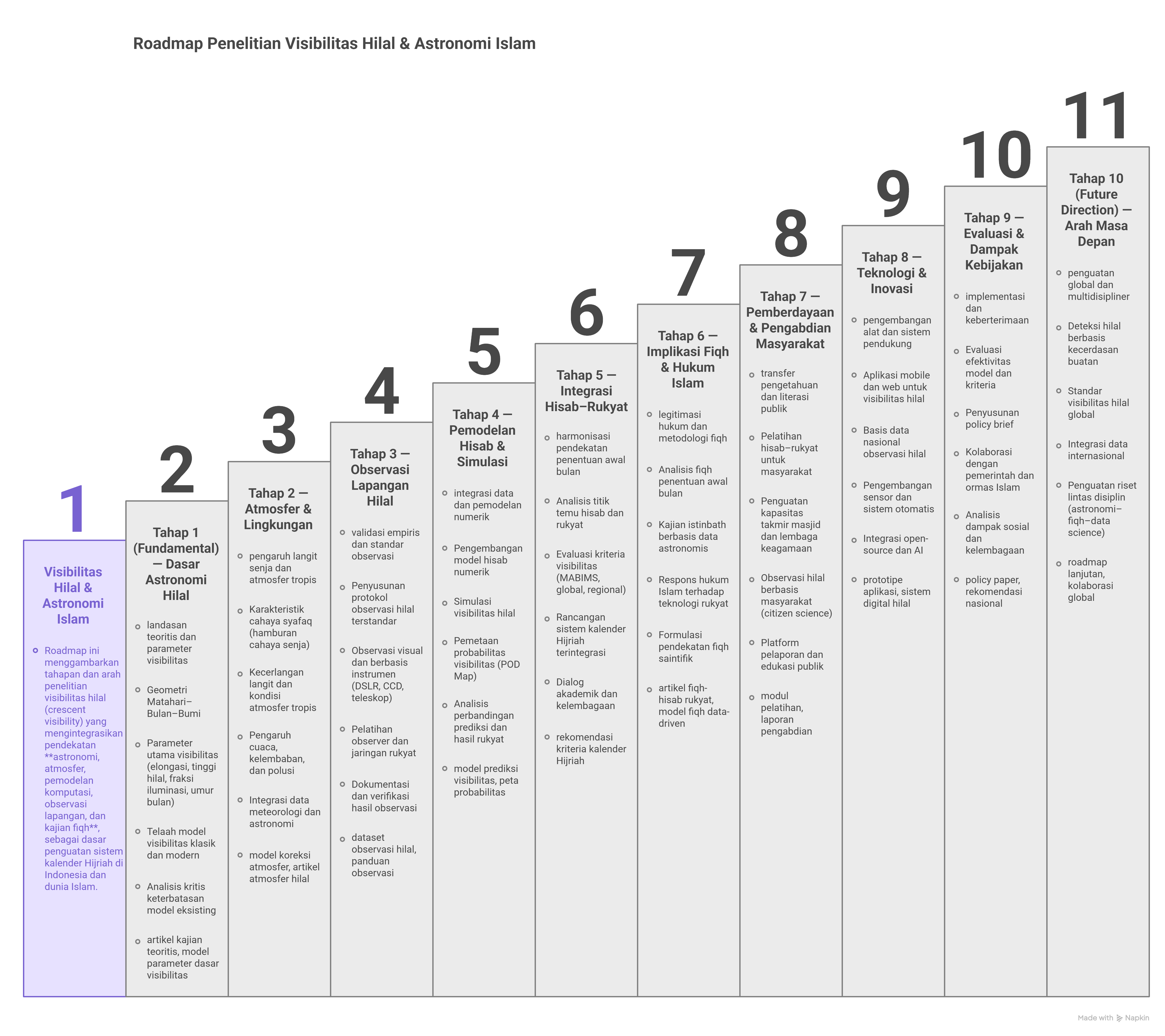
Research Roadmap: Twilight (Syafaq) and Crescent Visibility
Key Research Questions:
A. Fundamental Astronomical & Atmospheric Questions
- How does twilight sky brightness (syafaq) affect the minimum detectable contrast between the crescent Moon and the background sky?
- What are the dominant atmospheric parameters (aerosols, humidity, air mass) influencing crescent visibility during twilight in tropical regions?
- How do geometric parameters (elongation, altitude, phase, and lunar age) interact with twilight brightness in determining crescent visibility?
- To what extent do existing classical and modern visibility models adequately represent twilight conditions in low-latitude (tropical) atmospheres?
B. Observational & Empirical Questions
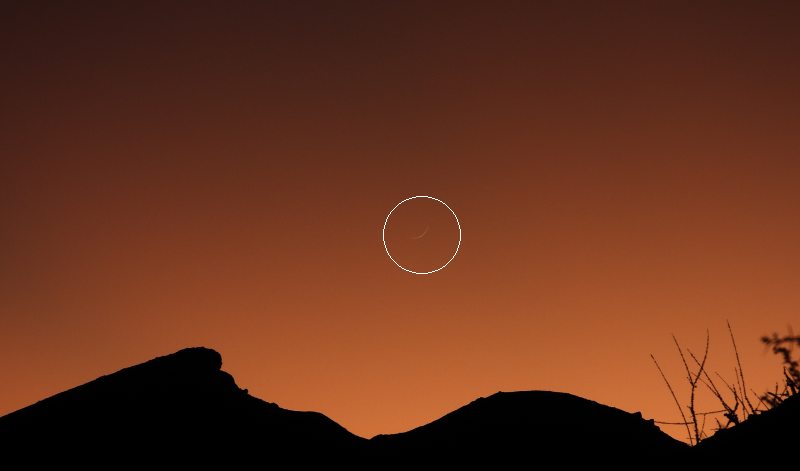
- What empirical thresholds of crescent visibility can be derived from systematic observations under varying twilight conditions?
- How consistent are naked-eye, optical-aided (binocular/CCD), and imaging-based detections of the crescent during twilight?
- What discrepancies exist between predicted visibility and actual observational outcomes under different twilight intensities?
- How can citizen science observations be standardized to reliably capture twilight-related visibility data?
C. Computational Modeling & Simulation Questions
- How can twilight brightness be quantitatively integrated into numerical crescent visibility models?
- What probabilistic visibility maps (POD maps) best represent the combined effects of geometry and twilight scattering?
- How accurate are simulation-based predictions compared to long-term observational datasets?
- Can machine learning models improve crescent detection by accounting for complex twilight-atmospheric interactions?
D. Hisab–Rukyat & Calendar Integration Questions
- How should twilight-influenced visibility data be incorporated into contemporary hisab–rukyat criteria?
- What level of uncertainty caused by twilight effects is acceptable for calendar determination?
- Can harmonized criteria be formulated that remain valid across different atmospheric regimes?
- How do twilight-based visibility thresholds impact regional versus global Hijri calendar unification efforts?
E. Jurisprudential (Fiqh) & Normative Questions
- How does empirical twilight-based visibility data reshape classical fiqh interpretations of rukyat hilal?
- To what extent can scientifically modeled visibility substitute or complement direct visual sighting in Islamic law?
- How should conflicting observational reports during strong twilight conditions be evaluated legally?
- What fiqh framework best accommodates probabilistic and data-driven crescent visibility models?
F. Societal, Policy, and Future-Oriented Questions
- How can public understanding of twilight effects improve trust in crescent visibility decisions?
- What policy implications arise from adopting twilight-aware visibility criteria at national and international levels?
- How can technology-driven observation systems reduce subjectivity in twilight crescent reports?
- What role will AI-assisted detection play in the future standardization of crescent visibility under twilight conditions?
Research Timeline 2025–2030
- 2025: Foundational studies & twilight (syafaq) data collection
- 2026: Observation & modeling
- 2027: Testing of lunar visibility criteria
- 2028: Integration of calendar systems & fiqh
- 2029: Technology development & community engagement
- 2030: International collaboration